A Brief History of PFAS
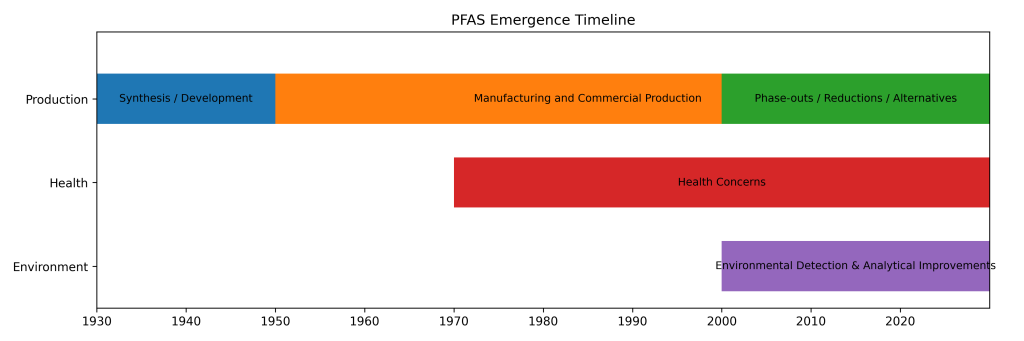
PFAS (per- and polyfluoroalkyl substances) are a class of synthetic chemicals first developed in the mid-20th century, prized for their exceptional resistance to heat, water, and oil.
1930s–1950s: Discovery and Early Commercial Use
- PFAS chemistry emerged in the late 1930s, when scientists discovered carbon–fluorine bonds were extraordinarily stable.
- In the 1940s–1950s, companies such as DuPont and 3M began large-scale production.
- Early applications included nonstick cookware (PTFE/Teflon), waterproof coatings, stain repellents, and industrial surfactants.
1960s–1990s: Widespread Adoption, Limited Oversight
- PFAS use expanded rapidly across consumer products, military applications, and industrial processes.
- Aqueous film-forming foam (AFFF), developed for firefighting—especially at military bases and airports—became a major source of environmental release.
- During this period, PFAS were largely unregulated, and their persistence in the environment was poorly understood by regulators, despite internal industry knowledge of health concerns.
Late 1990s–2000s: Scientific and Regulatory Awakening
- Independent researchers began detecting PFAS in drinking water, wildlife, and human blood worldwide.
- Studies linked PFAS exposure to cancer, immune suppression, thyroid disease, and developmental effects.
- In the early 2000s, the U.S. Environmental Protection Agency negotiated voluntary phase-outs of some legacy PFAS, including PFOS and PFOA, rather than issuing immediate bans.
2010s: Substitution and Expanding Concern
- Manufacturers replaced phased-out PFAS with newer “short-chain” PFAS, often with limited toxicological data.
- States—especially New Jersey, Michigan, and others—began setting state-level drinking water standards, moving faster than federal regulators.
- PFAS contamination became a major issue in environmental justice, military accountability, and public health policy.
2020s–Present: Regulation, Litigation, and Accountability
- PFAS regulation accelerated through state enforcement, federal rulemaking, and large-scale litigation.
- The U.S. government proposed national drinking water standards and moved to classify some PFAS as hazardous substances, increasing cleanup obligations.
- Major settlements with chemical manufacturers marked a shift toward corporate accountability for decades of PFAS pollution.